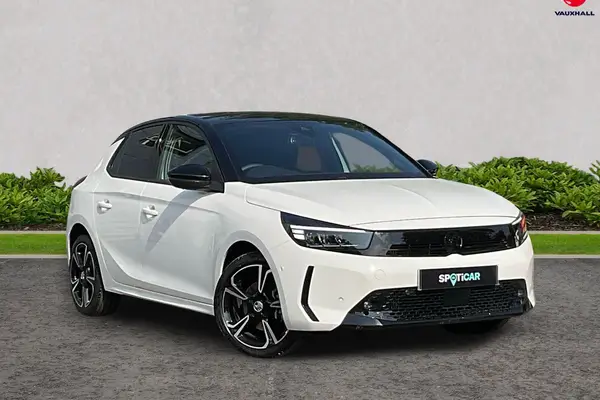
The Vauxhall Corsa has been a familiar sight on UK roads for decades. Compact dimensions, a wide choice of engines and an enormous used market have made it particularly popular with new drivers, commuters and anyone looking for a practical everyday hatchback.
That huge choice is good news if you’re buying one, but it also means seemingly similar Corsas can have very different histories, specifications and conditions.
Before buying a used Vauxhall Corsa, it’s therefore worth knowing exactly what to look for.
This guide covers the main checks to make before buying, from choosing the right generation and checking its history to inspecting the car and taking it for a proper test drive.
Ready to start looking? You can browse Vauxhall cars for sale on Vauxhall Trader.
Is the Vauxhall Corsa a Good Used Car?
For many buyers, the Corsa makes a lot of sense as a used car.
Its relatively compact size makes it well suited to urban driving, while five-door versions provide enough practicality for everyday use.
There’s also a considerable choice on the used market.
Depending on the age and generation you’re considering, you’ll encounter different petrol and diesel engines, manual and automatic transmissions and, with newer models, the fully electric Corsa Electric.
The important thing is finding a Corsa that suits how you’ll actually use it.
A car primarily used for short urban journeys may have very different requirements from one that will regularly cover motorway mileage.
Which Generation of Vauxhall Corsa Should You Buy?
The Corsa has been sold in Britain for decades, so the age of the vehicle makes a significant difference to what you’ll get for your money.
Corsa D
Produced during the late 2000s and 2010s, the Corsa D remains widely available on the second-hand market.
Its age means examples can often be relatively inexpensive, but condition and maintenance history become increasingly important.
Don’t buy solely because the asking price is low. On an older Corsa, inspect the car carefully and pay particular attention to its maintenance and MOT history.
Corsa E
The Corsa E followed and brought updated styling, technology and equipment while retaining the familiar Corsa formula.
These cars can provide a useful middle ground for buyers wanting something more modern without moving into the prices associated with much newer examples.
Again, specification can vary considerably between cars.
Corsa F
The newer-generation Corsa introduced a much more modern design and a significant technological update.
This generation is also available with an electric powertrain, giving buyers the option of the Corsa Electric alongside combustion-engine versions.
You’ll generally pay considerably more for a newer Corsa, so compare specification, mileage, age and condition carefully.
What Engine Should You Choose?
There’s no universally “best” Corsa engine because the right choice depends on your driving.
If most of your journeys are short trips around town, a petrol model may make more sense than an older diesel.
Drivers covering substantial motorway mileage may have different priorities.
When comparing engines, consider:
- Your annual mileage
- Typical journey length
- Fuel economy
- Insurance
- Vehicle tax where applicable
- Maintenance requirements
- Performance
- Purchase price
Don’t automatically assume that the model with the lowest advertised fuel consumption will be cheapest overall.
Purchase price, servicing, insurance and repairs all contribute to the true cost of ownership.
Should You Buy a Corsa Electric?
If you’re looking at newer Corsas, you’ll also encounter the electric version.
An electric Corsa could work particularly well if you have access to convenient home charging and your regular driving fits comfortably within the vehicle’s usable range.
Before buying a used electric vehicle, however, there are additional things to consider.
Check the condition and warranty status of the battery, available charging equipment and the charging options available where you live.
Also consider your typical longer journeys rather than focusing solely on your daily commute.
An EV that comfortably handles Monday to Friday driving still needs to work for the journeys you make at weekends and on longer trips.
What Should You Check on a Used Vauxhall Corsa?
Once you’ve found a Corsa you’re interested in, don’t judge it purely from the advert.
A proper inspection can uncover problems that aren’t obvious from photographs.
Check the Bodywork
Walk around the vehicle in good daylight.
Look for:
- Scratches and dents
- Rust or corrosion
- Uneven panel gaps
- Paint colour differences
- Cracked lights
- Windscreen damage
- Damaged alloy wheels
A few marks aren’t unusual on an older car.
You’re looking for anything inconsistent with the vehicle’s age, mileage or description.
Differences in paint colour or unusual panel gaps don’t necessarily mean a vehicle has suffered major accident damage, but they’re worth investigating.
Check the Tyres
Inspect all four tyres rather than simply looking at whichever wheel happens to be closest.
Check tread depth and look for:
- Cracking
- Bulges
- Cuts
- Uneven wear
Uneven tyre wear can have several causes, so it’s worth asking about if you notice it.
Also check whether the tyres are reasonably consistent across each axle.
Check the Interior
The Corsa’s interior can tell you quite a bit about how the car has been treated.
Look at the condition of the:
- Steering wheel
- Gear lever
- Pedals
- Driver’s seat
- Dashboard
- Door handles and switches
Make sure the level of wear appears reasonable for the mileage being advertised.
Then test the equipment.
Depending on the specification, this could include:
- Air conditioning
- Infotainment
- Bluetooth
- Apple CarPlay or Android Auto
- Electric windows
- Central locking
- Parking sensors
- Reversing camera
- Heated seats
- Heated steering wheel
- Cruise control
Equipment differs by age and trim, so confirm exactly what the individual vehicle should have.
Check the MOT History
This is one of the easiest checks you can make before you even arrange a viewing.
Use the Government’s MOT history service to check previous MOT tests.
Look for recurring advisories or failures involving things such as:
- Brakes
- Suspension
- Tyres
- Steering
- Corrosion
- Lighting
You can also compare recorded mileage between tests.
An advisory isn’t necessarily a major problem. What matters is understanding what was identified and whether necessary repairs or maintenance were subsequently completed.
Check the Service History
Ask the seller what service history is available.
Ideally, you’ll want documentation showing that the Corsa has been maintained appropriately throughout its life.
Look for:
- Service records
- Invoices
- Receipts
- Previous repair work
- Maintenance documentation
The older the vehicle, the more important its maintenance history becomes.
A cheap Corsa with little evidence of maintenance could quickly stop feeling cheap if several neglected jobs arrive at once.
Check the V5C and Vehicle Details
Ask to see the V5C registration certificate and check that the information corresponds with the vehicle you’re viewing.
Compare the registration and Vehicle Identification Number where appropriate.
You can also use the Government’s DVLA vehicle information service to check recorded vehicle information.
If details don’t match what you’ve been told, establish why before going any further.
Check for Outstanding Recalls
Before buying any used vehicle, it’s sensible to check whether there are outstanding safety recalls.
The UK Government provides a vehicle recall checker.
Recall work will generally be carried out by the manufacturer or its authorised repair network, but you should still establish whether any outstanding work applies to the particular car you’re considering.
Test Drive the Corsa
Never underestimate the importance of actually driving the car.
If possible, start the vehicle from cold rather than only driving it after the seller has already warmed it up.
Listen for unusual noises when the engine starts.
During the drive, pay attention to the steering, brakes, gearbox, clutch on manual models and suspension.
The car should drive predictably without unexpected noises, vibrations or warning lights.
Try different road conditions where possible.
A five-minute lap around a residential estate tells you approximately five minutes’ worth of information, which is not exactly a forensic investigation.
Check the Dashboard for Warning Lights
When you switch the ignition on, dashboard warning lights should illuminate as part of the normal startup process.
After starting the car, make sure warning lights go out as expected.
Don’t simply accept explanations for warning lights without investigating them properly.
If you’re unsure what a warning light means or why it’s illuminated, have the vehicle inspected before buying.
How Much Should You Pay for a Used Vauxhall Corsa?
There isn’t one correct price for a used Corsa.
Values vary according to factors including:
- Generation
- Age
- Mileage
- Engine
- Trim level
- Transmission
- Service history
- Number of previous owners
- Overall condition
- Optional equipment
The best approach is to compare multiple similar cars.
If one Corsa is dramatically cheaper than equivalent vehicles, find out why.
Likewise, a higher asking price should ideally be justified by condition, specification, mileage or history.
You can browse used Vauxhalls currently advertised to compare available cars.
Is a High-Mileage Vauxhall Corsa Worth Buying?
Potentially.
Mileage shouldn’t be used as the sole measure of whether a car is worth buying.
Consider mileage alongside the vehicle’s age, maintenance history, condition and previous usage.
A well-maintained car that’s covered longer journeys could potentially be preferable to a lower-mileage example that has suffered years of neglected maintenance and repeated short trips.
Service history is particularly valuable when considering higher-mileage vehicles.
Is the Vauxhall Corsa a Good First Car?
The Corsa is frequently considered by new drivers because of its compact dimensions, widespread availability and range of engines and specifications.
However, insurance can vary significantly according to the exact vehicle and driver.
If you’re buying your first car, obtain insurance quotes for the exact registration you’re considering before purchasing it.
Don’t assume every Corsa will cost roughly the same to insure simply because the badge on the back is identical.
Questions to Ask When Buying a Used Corsa
Before arranging a viewing or making an offer, ask the seller:
How long have you owned the car?
Why are you selling it?
Does it have service history?
When was it last serviced?
Are there any known mechanical or electrical problems?
Has it had any major repairs?
How many keys does it come with?
Are there any dashboard warning lights?
Is the mileage correct?
Is there anything that will need replacing soon?
You may not receive a Shakespearean monologue in response, but clear answers can help you decide whether the car is worth viewing.
Should You Buy a Used Vauxhall Corsa?
The Vauxhall Corsa can make a practical used car for a wide variety of buyers, but the enormous choice available means it’s worth being selective.
Don’t focus exclusively on mileage or price.
Consider the complete picture: age, condition, specification, service history, MOT history and how the car behaves on a test drive.
If you aren’t confident assessing a vehicle yourself, consider having it inspected independently before purchasing it.
Taking a little more time before buying can save considerably more time and money afterwards.
Find a Used Vauxhall for Sale
If you’re looking for your next Vauxhall, browse Vauxhall cars for sale through Vauxhall Trader.
Vauxhall Trader is a dedicated UK marketplace for people looking to buy and sell Vauxhall cars.
Already own a Corsa and thinking about changing it? You can also sell your Vauxhall through the marketplace.
For more buying and selling advice, visit the Vauxhall Trader Blog or take a look through our frequently asked questions.
Frequently Asked Questions
What should I check when buying a used Vauxhall Corsa?
Check its MOT and service history, mileage, bodywork, tyres, interior equipment, V5C and vehicle details. You should also test drive the car, check for warning lights and investigate any outstanding recalls.
Which Vauxhall Corsa is best to buy used?
The best version depends on your budget, annual mileage and how you intend to use the vehicle. Compare different generations, engines and specifications rather than choosing based on age or price alone.
Should I buy a high-mileage Corsa?
A higher-mileage Corsa isn’t automatically a bad purchase. Its maintenance history and overall condition can be more informative than mileage alone. Carefully inspect the vehicle and its records before deciding.
Is a used Vauxhall Corsa good for a first car?
A Corsa can be a practical option for new drivers due to its compact size and wide availability. However, insurance costs vary significantly, so obtain quotes for the exact car you’re considering before buying.
Where can I buy a used Vauxhall Corsa?
You can search Vauxhall cars for sale on Vauxhall Trader and compare vehicles currently being advertised by sellers across the UK.
About Vauxhall Trader
Vauxhall Trader is a specialist marketplace dedicated to Vauxhall vehicles in the UK.
Learn more about Vauxhall Trader, see our reviews or contact Vauxhall Trader if you need assistance using the marketplace.